

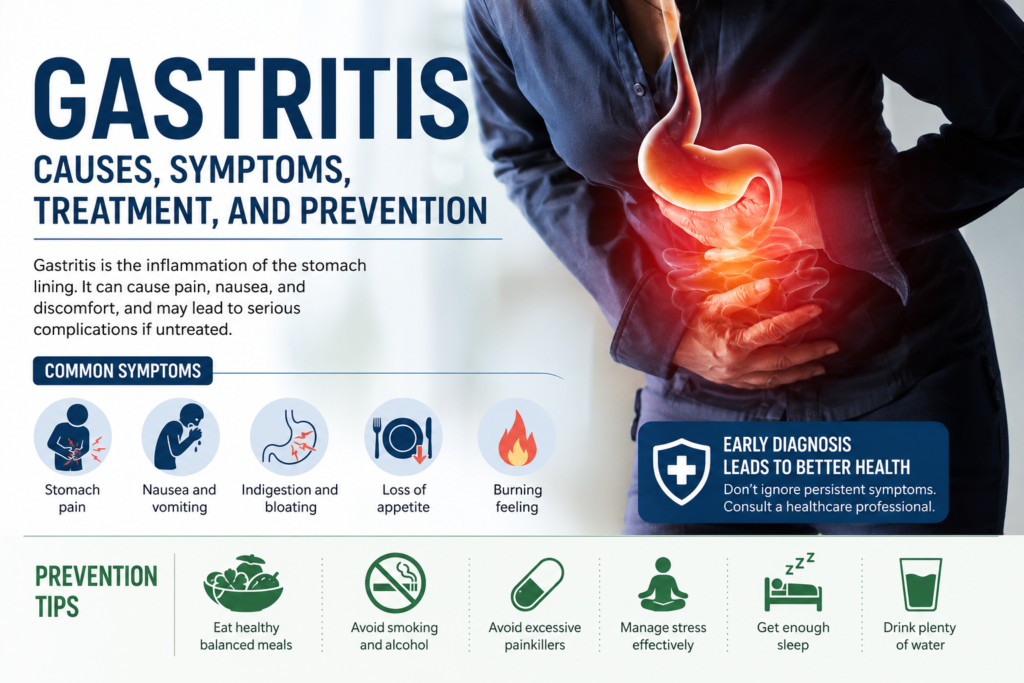
Gastritis is a common digestive condition that affects millions of people worldwide. It occurs when the lining of the stomach becomes inflamed, irritated, or weakened. Although gastritis is often temporary, chronic cases can lead to serious complications if left untreated.
Understanding the causes, recognizing the symptoms early, and adopting healthy lifestyle habits are essential for maintaining good digestive health.
What Is Gastritis?
Gastritis is the inflammation of the stomach lining, also known as the gastric mucosa. This protective layer shields the stomach from the strong acids used during digestion.
When this lining becomes damaged, stomach acid can irritate the tissue, causing pain, discomfort, and digestive problems.
There are two primary types of gastritis:
- Acute Gastritis: Develops suddenly and usually lasts for a short period.
- Chronic Gastritis: Develops slowly and may persist for months or even years without proper treatment.
Common Causes of Gastritis
Several factors can contribute to gastritis, including:
1. Helicobacter pylori (H. pylori)
One of the most common causes is infection with Helicobacter pylori, a bacterium that damages the stomach lining.
2. Excessive Alcohol Consumption
Drinking large amounts of alcohol can irritate and erode the stomach lining.
3. Long-Term Use of Pain Relievers
Frequent use of nonsteroidal anti-inflammatory drugs (NSAIDs), such as aspirin, ibuprofen, and naproxen, can increase the risk of gastritis.
4. Stress
Severe physical stress caused by surgery, burns, infections, or major injuries may trigger gastritis.
5. Autoimmune Disorders
In autoimmune gastritis, the body’s immune system mistakenly attacks healthy stomach cells.
6. Smoking
Smoking weakens the stomach’s natural protective barrier and slows healing.
Symptoms of Gastritis
Symptoms vary depending on the severity of the inflammation.
Common symptoms include:
- Burning pain in the upper abdomen
- Nausea
- Vomiting
- Indigestion
- Loss of appetite
- Bloating
- Frequent burping
- Feeling full after eating only a small amount
- Heartburn
Severe cases may include:
- Vomiting blood
- Black or tarry stools
- Dizziness
- Severe stomach pain
These symptoms require immediate medical attention.
How Gastritis Is Diagnosed
Doctors may recommend several tests:
- Physical examination
- Medical history review
- Blood tests
- Stool tests
- Breath test for H. pylori
- Upper gastrointestinal endoscopy
- Biopsy of the stomach lining
Early diagnosis helps prevent complications.
Treatment Options
Treatment depends on the underlying cause.
Medications
Common medications include:
- Proton Pump Inhibitors (PPIs)
- H2 receptor blockers
- Antacids
- Antibiotics (for H. pylori infections)
- Protective medications for the stomach lining
Always follow your healthcare provider’s instructions.
Best Foods for Gastritis
Eating stomach-friendly foods may help reduce irritation.
Recommended foods include:
- Oatmeal
- Bananas
- Brown rice
- Apples
- Sweet potatoes
- Carrots
- Leafy green vegetables
- Skinless chicken
- Turkey
- Fish
- Yogurt with probiotics (if tolerated)
Drink plenty of water throughout the day.
Foods to Avoid
Certain foods may worsen symptoms.
Try to limit or avoid:
- Spicy foods
- Fried foods
- Fatty meals
- Coffee
- Alcohol
- Carbonated beverages
- Citrus fruits
- Tomato-based products
- Chocolate
- Highly processed foods
Lifestyle Tips
Healthy habits can significantly reduce gastritis symptoms.
- Eat smaller meals more frequently.
- Avoid lying down immediately after eating.
- Maintain a healthy weight.
- Quit smoking.
- Reduce alcohol intake.
- Manage stress through exercise or relaxation techniques.
- Get adequate sleep.
- Stay physically active.
Possible Complications
If left untreated, gastritis may lead to:
- Stomach ulcers
- Internal bleeding
- Anemia
- Vitamin B12 deficiency
- Increased risk of stomach cancer (in certain chronic cases)
Regular medical follow-up is recommended for chronic gastritis.
When Should You See a Doctor?
Seek medical care if:
- Symptoms last longer than one week.
- You experience severe abdominal pain.
- You vomit blood.
- Your stools become black.
- You lose weight unexpectedly.
- Symptoms continue despite treatment.
Prompt evaluation can help prevent serious complications.
Frequently Asked Questions
Can gastritis heal on its own?
Mild gastritis may improve with dietary changes and avoiding irritants. However, persistent symptoms should be evaluated by a healthcare professional.
Is gastritis contagious?
Gastritis itself is not contagious, but H. pylori, a common cause, can spread through contaminated food, water, or close contact.
Can stress cause gastritis?
Severe physical stress can contribute to gastritis, while emotional stress may worsen symptoms in some individuals.
Can gastritis become serious?
Yes. Chronic untreated gastritis may lead to ulcers, bleeding, and other complications.
Conclusion
Gastritis is a common but manageable digestive condition. Most people recover successfully with proper medical care, healthy eating habits, and lifestyle modifications. Recognizing the symptoms early and seeking professional advice can prevent complications and improve overall digestive health.
If you experience persistent stomach pain or digestive discomfort, consult a qualified healthcare provider for an accurate diagnosis and personalized treatment plan.